Part Two: Hair as Identity and Communication
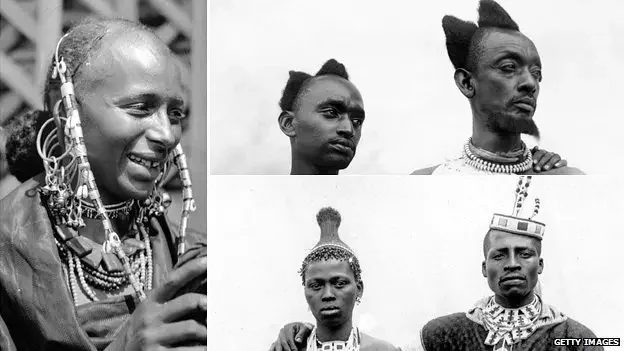
Before colonization, before enslavement, before Western beauty standards, hair in African societies was not decoration. It was information.
Hair functioned as a visual language. It told people who you were, where you belonged, and how to relate to you — often before a word was spoken. Communities across the African continent developed distinct hair systems that were widely understood within their cultural context. These systems were learned, shared, and maintained collectively.
Hair was not styled randomly. Braids, twists, locs, shaved patterns, and wrapped styles carried meaning. They reflected age, life stage, marital status, family lineage, spiritual role, and social position. People knew how to “read” hair in the same way they read clothing, symbols, or body markings.
This knowledge was embedded into daily life.
Children learned these meanings early. They watched elders groom one another. They observed which styles were worn at certain times and which were reserved for specific roles. Hair became a form of social literacy — something you were expected to understand simply by being part of the community.
Grooming itself was not isolated or rushed. Hair was done in groups, in shared spaces, often accompanied by conversation, storytelling, and teaching. The act of doing hair was relational. It reinforced trust, kinship, and continuity between generations. Touching someone’s hair was not casual — it was intimate and often reserved for those with permission and relationship.
Hair also held spiritual significance in many cultures. It was seen as an extension of the self, sometimes believed to connect a person to ancestors, the earth, or the unseen world. Because of this, grooming carried responsibility. How hair was handled mattered.
Styles were also practical. Braiding protected hair from heat and environment. Structured styles reduced daily manipulation. Design and function worked together. But function never erased meaning — the style still communicated something about the person wearing it.
This is important to understand clearly:
African hair systems were organized, intentional, and sophisticated. They did not exist on the margins of society. They were part of how society worked.
When these systems were disrupted, it wasn’t just hair that was affected. A visual language was interrupted. The ability to recognize identity, status, and belonging through hair was damaged. Hair shifted from being a shared cultural code to something that would later be misunderstood, controlled, and judged.
But before any of that happened, hair was communication.
And communication was power.
Sources
National Museum of African American History & Culture (Smithsonian Institution)
https://nmaahc.si.edu/explore/stories/strands-of-inspiration
OkayAfrica — A Regional Walk Through the History of African Hair Braiding
https://www.okayafrica.com/a-regional-walk-through-the-history-of-african-hair-braiding/
Black Iowa — The History of Hair
https://blackiowa.org/digital-resources/utrdigitalexhibit/history-of-hair/
Genesis Career College — History of Braids: More Than Just a Hairstyle
https://www.genesiscareer.edu/history-of-braids-more-than-just-a-hairstyle/
Kwekudee Trip Down Memory Lane — Hairstyles in African Culture
https://kwekudee-tripdownmemorylane.blogspot.com/2012/09/hairstyles-in-african-culture.html